I'm a 21-year-old student currently studying CG Arts and Animation. I'm amazed at how much I've learnt and I'm excited for what will come along the years
Tuesday, 14 December 2010
Trying out some modelling
I haven't had mch ofa chance to model much as of yet, so I did a few models of what would go in my scene of a little girls room.
A question
To Phil - While your doing my three week review, could you help me with something? I'm finding it a little bit difficult to determine where the matte painting could end and the modelling begin in a little girls room. I understand that the doll will have to be modelled, because she isnt part of the set. but i would like to model the room aswel, I know that if I did this then there wouldnt be anything to matte paint because everything would be modelled. If you get my drift? Hopefully you can help me with this.... and if anyone else is reading this then please put in some ideas if you have time.
Thanks in advance
Thanks in advance
A very Very simple look at what the final piece will look like
Clearly the fnal piece wouldn't be a this low of a quality but th colour pallet is in there. I want this to be a little girls room, so it will be full of pinks and yellows. I will need to research more into what object there are in little girls rooms. For Example, teddies, clothes, wardrobe and other girlies bedroom objects.
Review - The Haunting 1963
![]() |
| Fig 1. The Haunting Poster |
Directed by : Robert Wise
Starring : Julie Harris
![]() |
| Fig 2. The Haunting Still |
From the open sequence, this film creates that tense feeling that the audience feels throughout. The camera shots are most key in this picture, because the scenes are shot in such a way that the area that is in focus, is darkened up by an odd back lighting effect. For example everytime the front of the house is looked at, it has that eerie light from behind. (Haflidason, 2007) stats that the director uses '.. deliberately unsettling camera angles he captures the movie in icy cold shadow-strewn photography'. Indeed this is true, just by simply looking at the character's face when they are most scared, it is plain to see that those faces become whiter and brighter than they were. This is all to do with the clever use of light, the stronger the light contrasts, the scary the moment is ment to be.
![]() |
| Fig 3 Julie Harris in The Haunting 1963 |
'...a good old-fashioned ghost story where the unknown is more frightening than what is known.' (Stryker, 2005)
This film creates a large sense of irrational fear, mainly through the use of the mirrors. Throughtout the film, the mirrors became a 'hot spot', constantly looking at them to see if something will happen. Maybe a ghost, maybe an object will move or anything along those lines. You constantly find yourself waiting/expecting something to happen, if somehting hasn't happened yet, it could always be the next mirror.![]() |
| Fig 4 The Haunting Still 2 |
'... this film lays siege to your senses through your ears first and foremost, while the visual component of the attack is largely subliminal.' (Ashlin,2010) Although the visuals of this film are superb, the noises of which the house creates, makes this film what it is. It the noises that sends that irrational fear to the audience, if you could see what was making h noises, then the fears wouldn't be irrational. The first use of the strong sounds, is the scene where Eleanor and Theo are in their room and theres large knocking and srapping at the door, or as Ashlin describes it, 'pounding on the walls and floors with the force of a rhinoceros wielding a sledgehammer'. This scene is the most effective because the link with the noises to the camera angles on the faces of the characters, sends a new level of fear to the audience. What is behind the door?
Illustration Bibliography
Fig 1, The Haunting Poster, 1963, [photography], http://www.fatally-yours.com/wp-content/uploads/The%20Haunting%20DVD%20cover.jpg, (14/12/2010)
Fig 2. The Haunting Still, 1963, [photography], http://www.shadowsandscreams.com/storage/haunting3.jpg?__SQUARESPACE_CACHEVERSION=1253062686166, (14/12/2010)
Fig 3. Julie Harris in the Haunting 1963,1963, [photography], https://blogger.googleusercontent.com/img/b/R29vZ2xl/AVvXsEjn5tv0pL3XaPsFX3vdg3QJxoLKAHwqjEWXdgIj0uyAqN11FITF5_6mY-q6gWrF0hCr46lBQHL4CZxfGGdE7XJ_OdKyCgCGa5P2oxDeTTFcnWHo6_QDn8V6ItoMnw98F6ZZClExcTbd8Nck/s1600/Julie+Harris+in+The+Haunting+(1963).jpg, (14/12/2010)
Fig 4, The Haunting Still 2, 1963, [photography], http://www.chicagonow.com/blogs/leshock-value/assets_c/2010/10/The%20Haunting%201963-thumb-572xauto-251169.jpg, (14/12/2010)
Bibliography
Halfidason, A, 2007, The Haunting 1963 Review, http://www.bbc.co.uk/films/2000/12/12/the_haunting_1963_review.shtml, (13/12/2010)
Stryker,J, 2005, Review The Haunting [1963], http://www.horrorexpress.com/forum/showthread.php?t=1796, (14/12/2010)
Ashlin, S, 2010, The Haunting 1963, http://www.1000misspenthours.com/reviews/reviewsh-m/haunting1963.htm, (14/12/2010)
Review - The tenant
![]() |
| Fig 1. The Tenant |
Director: Roman Polanski
Starring: Roman Polanski as Trelkovski
Isabelle Adjani as Stella
Melvyn Douglas as Monsieur Zy
![]() |
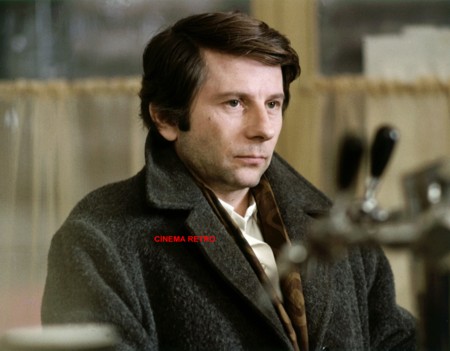
| Fig 2. The Tenant Still |
From the beginning of the film, Polanski's character, Trelkovski is boundering as an outsider from the moment they meet him. The Accent from his polish background and his need for a identification card constantly make the neighbours suspicious of him. From this point on the audience notices that the neighbours are constantly onto him and no matter how much he tried to be kind to them, he can't seem to do anything right. They constantly complain about the noise he's apparently making, Vincent Canby also notices this, ' Trelkovsky exists. He inhabits his own body, but it's as if he had no lease on it, as if at any moment he could be dispossessed for having listened to the radio in his head after 10 P.M.' (Canby, 1976).
'The message: Living alone, while initially liberating and bohemian, usually ends in your becoming That Weird Guy Down the Hall Who Does Creepy Drag. The only solution is to throw yourself out the window.
If you fail the first time, repeat.' (Savage, 2007)
This film has many twists and turns of the main character, turning him from a regular guy to the suicidal drag man. As the film goes on your pulled into the madness of the film, questioning what is wrong and what is right. For example, the toilet room, where every night a new person stands there motionless either starring out of the window or just at the wall. the strogest part of this sequence is when Trelkovski visits the toilet room and looks out of the window and see's himself looking right back. This creates an impact of eerieness and dread towards the character. This also strongly links to the ending.
![]() |
| Fig 3 The Tenant Still 2 |
When it comes to the end, theres a question that raises up, that question is, ' is the film going through a whole loop'. This being of course the result of seeing Trelkovski in the hospital bed visited by his flashback of whenhe visited Simone. There's a big sense of the neighbours finally turned Trelkovski into Simone after all, even though he tried everything to get free.
Illustration bibliography
Fig 1, The Tenant Poster, 1976, [photography], http://horror.mdv.se/1976%20-%20Tenant,%20The%20(DVD).jpg, 12/12/2010.
Fig 2. The Tenant still, 1976, [photography], http://www.cinemaretro.com/uploads/thetenant.jpg, 12/12/2010.
Fig 3. The Tenant Still 2, 1976, [photography], https://blogger.googleusercontent.com/img/b/R29vZ2xl/AVvXsEijbh8hj1ORshOzAFyuxgr5b9ynSFJOK_1eSZ2dbbDgS5U3BI6G5Sod2HYKPVP-261Z7O4K18UN1pzJv13UTY54ZnOjGlkOZzuV7hYdSSE6prbVsFFDvQFBOMHu705Okbh45i7vXpO0uZ8/s400/tenant.jpg, 12/12/2010
Bibliography
Canby, V, (1976), The Tenant (1976), In The New York Times, [Online], http://movies.nytimes.com/movie/review?res=9B06E3DD143FE334BC4951DFB066838D669EDE.
Savage, D, 2007, A POLANSKI GUIDE TO URBAN LIVING, Cinema Retro, http://www.cinemaretro.com/index.php?serendipity%5Baction%5D=search&serendipity%5BsearchTerm%5D=chills
Sunday, 12 December 2010
As I draw these dolls, I can smell an over-powering scent of baby food.... weird!
These two images are the start of the creation of the doll, only problem is at the moment, they look way to manly. What I can picture in my head and what I want is a doll to look like a sweet little girl, to create a feeling of its always the quite ones....
Maybe a bit too far?
Here are some test for possible eyes of the doll. The wide eyes create an innocent look, whereas the broken and damaged eyes show that they are warring away. Maybe a route to go down, is the super realistic look, his could be achieved by looking at human eyes and then adding the glossiness that a doll has.
Pre-viz thumbnails
What I want to create in the overall image is a sense of fear brought on by the doll. I had an idea when drawing this thumbnail, what I've done is created the reflection as the dark side of the room (if the doll ends up broken, then so will the rest of 'her world'), the tree on the real side will be lush and green, but the reflection will be bare and dark. As of the moment its still early days and this is just an idea, my worry with this is that it will take away a lot of scare away from the doll and more of a fear of the 'other side'. Again the idea of a broken doll could also be too much, maybe just the idea of the reflection and the way a doll looks (highly human) is eerie enough.

Subscribe to:
Posts (Atom)